
ABRSM Grade 3 · Piano
ABRSM Grade 3 sight-reading practice
Grade 3 is where sight-reading starts to feel like real music: longer phrases, dotted rhythms and hand positions that move. The good news is that it’s very trainable with daily new material.
- Free exercises
- Printable PDF
- No account needed
- Grade 3 level
Level 3: One octave, dotted quarters, rests, 6/8, B♭ and A major
Clap the rhythm first, then play slowly without stopping.
Tip: choose “Save as PDF” in the print dialog to download it as a PDF.
Practise with instant feedback →What Grade 3 sight-reading typically asks for
A summary of the typical parameters for orientation. Notimo is independent and not affiliated with ABRSM — always check the current official syllabus for the exact requirements.
- Around 4–8 bars
- Keys with up to two sharps or flats
- Dotted rhythms
- Position changes within the piece
- Hands together, with simple dynamics and articulation
About the exercises on this page
Level 3 adds dotted quarter–eighth rhythms, rests, 6/8 and B♭ and A major; with “Both hands” the left hand plays the harmony in long notes. Exam pieces can have a more independent left hand, so add exam-style material as well.
Every click on “New exercise” writes a new melody that you have never seen before — the one thing sight-reading practice needs most. Print it or save it as a PDF to use in lessons.
How to practise Grade 3 sight-reading
A routine for 5–10 minutes a day:
- Scan for the highest and lowest note — that tells you where your hand has to move.
- Mark dotted rhythms in your head: “ta-a-ti” for a dotted quarter plus an eighth.
- Look one beat ahead while you play; your eyes should always be slightly in front of your hands.
- Pick a tempo you can keep through the hardest bar, not the easiest one.
- Use “Medium” in the generator and switch keys every day.
Common mistakes — and how to avoid them
These cost the most marks at this level:
- Rushing the short note after a dot.
- Looking down at the keys at every position change — practise finding notes by feel.
- Playing all notes at the same volume and missing the dynamics.
Get feedback on every note
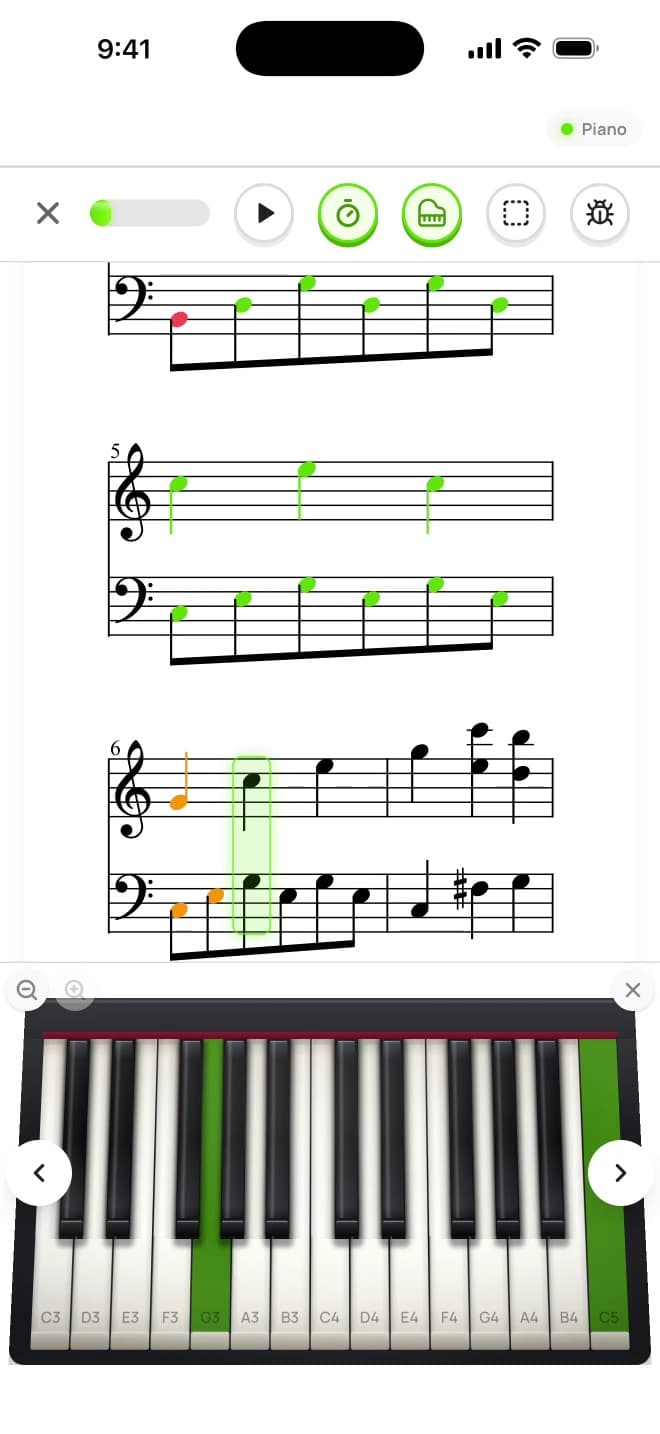
A printed sheet can’t tell you which note was wrong. In Notimo you play on a MIDI keyboard or the on-screen piano and see every note marked right or wrong in real time, with timing feedback and extra practice on the notes you still confuse.
Frequently asked questions
How long is the Grade 3 sight-reading piece?
Typically around 4 to 8 bars. Use 8-bar exercises in practice so the exam piece feels short.
How do I stop losing my place at position changes?
Find the position change during the preparation time and decide which finger plays the first note of the new position. Then keep your eyes on the music, not the keys.
What tempo should I choose in the test?
The tempo you can keep through the hardest bar. A slow, steady performance scores better than a fast one with stops.
Train Grade 3 sight-reading with instant feedback
Free to start, right in your browser — on your MIDI keyboard or the on-screen piano.